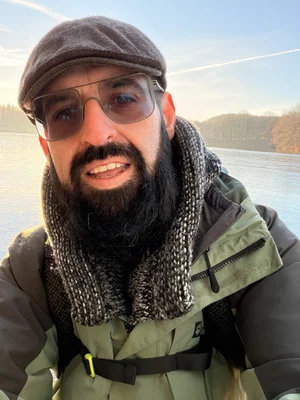
The itch: 7 years of entrepreneurship
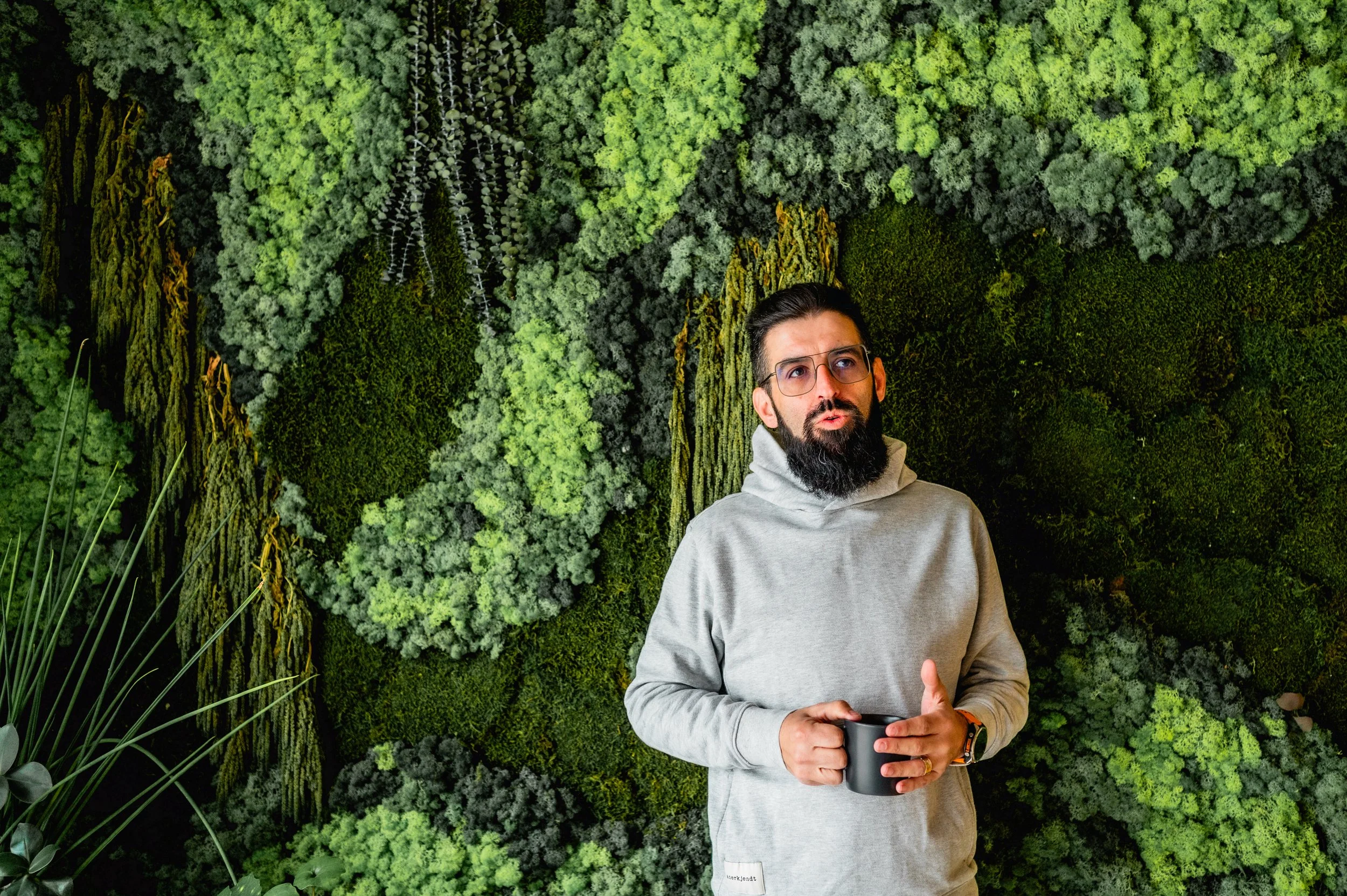
In 2019, something started to itch. I had no business plan, no grand vision, and no clear answer to the question "so what are you going to do?" I just had an itch, so I started a side business.
What did it do? A bit of everything. Some cycling events, some marketing, some consultancy. Put it on a slide today and nobody would recognise a strategy in it, and rightly so, because there wasn't one. There was one clear idea though: get away from IT. I wanted to be less dependent on the industry I had spent my whole career in.
That idea turned out to be wrong, and it may be the best thing that happened to me.
Walking away from your strength
The insight didn't arrive all at once. The further I stepped away from IT, the clearer it became that staying close to companies and close to technology simply suits me better. What I saw as a dependency was actually my strength. Apparently you sometimes have to walk away from something to see what you're leaving behind.
I didn't go back to where I came from, though. I still find pure architecture fascinating, but not as fascinating as bringing in a discipline that is still largely underdeveloped. I first heard about FinOps in 2018 and it never left the back of my mind. Architecture, finance and business at one intersection: exactly the combination I had been missing for years without having a name for it.
Two steps back
By nature I think fast and want to act fast. But I'm also willing to take two steps back along the way. Was that the right move or not? Then adjust. The time that takes isn't wasted. It's letting the process do its work. An idea needs room to form.
So entrepreneurship, for me, isn't a straight line but an iteration. Are you strong at something today? Great. But what if that changes tomorrow? Then you need to be doing something extra today to have an answer ready. The question is always: what's the best bet right now?
Last year, that bet was TBM. I picked it up because something was missing at a client, and TBM was the answer. Since then it keeps coming back, at my current client and at others. I've seen finance managers' eyes open when they realise I know that world. That's the moment credibility is established: proof that I can, and want to, speak their language.
This year, the bet is FinOps for AI, which pulls me back towards the technology. There you need to understand where the leaks occur and what to look at to close them.
They look like opposite directions, and that's precisely the point. If I don't know both, I can't have the right conversations today, and the right conversations are what this work is about. Anyone who knows FinOps will recognise the pattern: inform, optimise, operate, and again. You're never done. You only get sharper.
100 grams of digital transformation
Why had I been missing that intersection? Because I spent years working for vendors, where digital transformation happens remarkably quickly. At EMC, it had begun the moment a high-end storage platform was sold. At VMware, it began with a licence renewal, and if the deal included 100 grams of VCF, the customer was officially transformed.
Reality inside companies is different. Transformation is slow and messy, and it's rarely about the product you just bought. It's about people, about ownership, about who loses sleep over the invoice. That's where FinOps lives too: not in the tool, but in the conversation between engineering, finance and business. That's where I wanted to be.
The tightrope
Entrepreneurship has become the most interesting part of my own transformation. An entrepreneur is never finished and never has anything truly done. There's always room to build more, to make it sharper, to ride the next wave. And it starts with yourself: if you can convince yourself of your story, you stand a chance of convincing others.
I won't romanticise it. Taking a job at a company is, and remains, a perfectly valid option, and I weigh it regularly. That's the tightrope you walk as an independent, certainly in a country that doesn't exactly make life easy for entrepreneurs. That trade-off doesn't disappear after year one. It hasn't after year seven either.
And yet. Every time, there's that itch again.
The next chapter
Today a new chapter begins with Costra. For the first time I'm not building alone but with two partners, in the domain all three of us believe in: FinOps. Making each other sharper, making each other stronger. It's a different kind of entrepreneurship than going solo, and I'm looking forward to it.
And then there's Zweden Zien, a project that has nothing to do with cloud costs and that might mean something in the last part of my career. Or might not. I don't know, and that's fine.
Because when I look at what has happened in seven years, the main thing I know is this: nothing is certain and everything is up in the air. That scares some people.
It just gives me an itch.